Yes, observant reader, I’ve changed the header and layout, and if I can decipher the HTML code for my template, I might actually make the page look half decent, in about six years.
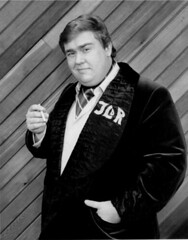
But enjoy the all-new photo of myself at rest, and take the poll!
In the era before the Internet, PDAs, cell phones, and iPods, I bought a Filofax in one of my many futile attempts to “get organized.” The chunk of plastic and paper collected dust following my few attempts to actually use it.
It was then that I’ve had my life’s major epiphany: in order to be organized, you have to be organized.
I had hoped that the Filofax would magically transform the mess then known as my life. The Filofax would help me with appointments, phone numbers, birthdays, and the other assorted minutiae that make up the grist of living.
It did not do much good, since I never entered my appointments and friends’ birthdays, while I barely consulted it for telephone numbers and addresses. In order for the Filofax to transform my life into a streamlined, efficient machine, I would have to do the things that would make my life into a streamlined, efficient machine – whether I owned a stupid $30 phonebook-calendar or not.
Party time
Several electronic devices and computer calendars later, I still struggle to keep appointments, remember birthdays, and generally keep organized. My desk is a testament to mounds of paper needing to be filed. Unfinished and un-started projects litter the roadway of my literary endeavors. Things are so bad that when everything is “organized,” I grow suspicious, for it means that I have spent my time in cleaning up rather than actually doing the tasks for which being organized would make such a snap.
Now, comes my worst nightmare.
I have about eight writing projects somewhere between larval and butterfly. They range from the “novel” to short stories to a non-fiction book to a magazine piece on outsourcing. Some of these projects are smashingly good ideas, if I say so myself, while others are limper than month-old lettuce. But deciding which ones I should pursue has proven more difficult than a chick-lit heroine deciding between a pair of Jimmy Choos and Malono Blahniks (or the uber-dick-lit hero choosing between Honey Ryder and Pussy Galore).
In the past, this would not have been an issue — I would have simply done all of them with various degrees of enthusiasm (and success). Things would have panned themselves out: I would drop one or two things completely, aggressively pursue one or two others, and hold the rest in limbo. Then, once I finished a story, I would try to get it published, contemplate suicide as the rejection notes piled up, then brush the dirt off my jacket and start anew.
You know what I’m going to say next: since Baby arrived, I have no time to engage in such narcissistic dallying, though dally I do. This is an organizational crisis for me, as I can’t decide what I should pursue in the limited minutes allotted to me when I’m not changing Baby, burping Baby, bathing Baby, taking Baby off Wife’s hands, wiping Baby’s spit off my face, etc.
Now, I know of Super Moms and Dads who manage to take care of their children’s (plural) basic needs, plus teach them Mandarin, cook vegan coc au vin, spend all their free time enriching their children’s lives, and then turn around and write 1,000 perfectly formed words a day. That is not going to be me. I am basically a zombie with about enough motivation to turn on the computer, and that’s it.
Unaware of his surroundings, he was then hit by a bus
I take it that success in this arena is a matter of prioritization. Define one’s goals. Create a plan. Conceptualize action steps. Move forward.
Or, to put it another way, stop wasting my time on stupid shit. Such as writing circular, self-pitying blog entries like the one you’ve just read, or changing the layout of a blog, such as the one you’re currently not enjoying. To thine own self be true.
Wednesday, July 18, 2007
Organization Man

Thursday, September 28, 2006
Pay Attention
Ever see this card trick, available at a Website near you?
You may have been alerted to it by an e-mail forwarded from your uncle's best friend's sister's dogsitter's third cousin. (It's been floating around for years.) Simply pick one of the cards below:


Concentrate on that card. Really hard! Don't look at anything else for 15 minutes! Then click to a new screen, and viola! Your card has disappeared!


Of course, the card you picked disappeared because all the cards have disappeared. Though they resemble each other, the cards on each screen are different. The trick is predicated on the fact that you can't remember all the cards from the first screen to the second, because you weren't paying attention. Showing all the cards on one screen makes it obvious.
When I lined up the cards next to each other, as above, and, remembering how this trick fooled me, I thought, "I shouldn't have put lead paint chips on my baloney sandwiches growing up, even though the chips gave it that pure crunchy goodness."
While people pay copious sums to Ricky Jay and Penn and Teller to dazzle them, for absent-minded folks like myself, this attention deficit disorder can be a killer in the fiction game.
When we are writing fiction -- really in a groove, riding that caffeinated buzz or just high on life -- our attention is so sharply focused that we could cut a frozen steak with it.
If only I could keep that going. I get up to pace. I get interrupted by a phone call. I need to eat something. And so on.
Perhaps more importantly, we are constantly reminded as writers to read fiction for more than entertainment: examine the structure, characterization, symbolism, and language. Learn from Moby-Dick rather than simply enjoying it, though most people enjoy getting their thumb staple-gunned to a wall than reading Moby-Dick.
Future novelists
Wife is particularly good at this kind of reading, because she has reservoirs of discipline that never welled up in me, much less evaporated over the years. For instance, when we're discussing books we've both read, wife will say something like, "The narrative voice in Ragtime is unlike anything else, and the plotting remarkable, in how the connective tissue of the historical characters all fit perfectly.
"And Doctorow can get away with so much because he has the perfect voice -- the prose just flows off the page. I've learned so much from that book that I can use in my own writing."
"Yes, I agree" I say, thinking, "Well, I know I liked it."
I can blame this propensity on my abject, dissolute inability to concentrate on anything for more than six minutes, which in turn I can blame on being brought up on the television farm. I can hum the theme song from "The Price Is Right," but I can't verbalize what I learned from reading "Invisible Man," one of my favorite books, other than "In order to be a great writer like Ralph Ellison, you have to write really, really great."
(It's unclear to me what would have happened had I been born in the era before television, particularly in the 19th Century. Ignoring the fact that I would have been a peasant in The Pale, I may have been more focused. There was no "Price Is Right." Hell, there was no radio. All you did for fun was push a hoop with a stick, study Torah, and hide in the basement during Monday Night Pogrom.)
I have a sorry history of wanting to quit something if I can't do it right the first time. That's why I don't play guitar, speak French, juggle four balls, or bother to put the cap on the toothpaste. 
I don't know art, but I know what I like
I am curious if there are others who write fiction yet do not consciously "study" novels or stories, or who have microscopic attention spans. Do you also burn everything you cook? Miss the plot twists in a movie? Have gotten into three (3) or more automobile accidents when you were driving?
Admittedly, I've been in three accidents when I was behind the wheel, but only two were my fault. Nobody was hurt. And one happened when I was 18, so it doesn't count. Right?